Tungasugit – Tánsi/Tawáw – Boozhoo Wotziye – Waaciye – Bienvenue – Taanshi – Hau & Han
Welcome
grassslide
forestslide
Working towards truth and reconciliation and
equality of opportunity for Indigenous people.
forest
Getting to know, respect and appreciate one another through our circles is already a significant action toward reconciliation.
National Indigenous Peoples Day
Days
Hours
Minutes
NEW LOCATION
FREE BARBECUE
Circles for Reconciliation’s 4th Annual Celebration and Barbecue
Friday, June 19, 2026
11:00 AM – 2:30 PM
*Kildonan Park, Winnipeg
~Artisan Market~ ~Children’s Games and Activities~ ~Door Prizes~ ~Entertainment~ ~Exhibition Information Tables~ ~Jigging Competition~ ~Talking Circle~
ENTERTAINMENT
*Due to construction at Sergeant Tommy Prince Place this year, our event will be hosted at Kildonan Park. Please join us as we gather, connect and celebrate together in a new space.
“We are committed to strengthening our programs, expanding access, supporting Indigenous leadership, and creating pathways for deeper learning. Reconciliation requires persistence, especially when it feels less visible.”
The aim of Circles for Reconciliation is to establish trusting, meaningful relationships between Indigenous and non-Indigenous peoples as part of the 94 Calls to Action from the Truth and Reconciliation Commission (TRC).
The means to achieve this is the creation of small gatherings of an equal number of Indigenous and non-Indigenous people in discussion circles.
Every Circle needs five Indigenous and five non-Indigenous participants. Relationships are built by equal voices.
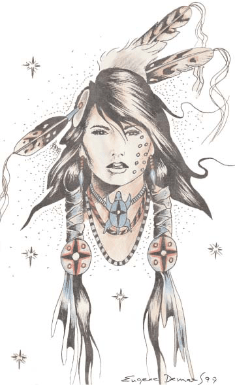
Artwork by Eugene Demas.
How we do it
Each group of ten participants, led by two trained facilitators, meets weekly or biweekly for seven gatherings 90 minutes in length.
These seven meetings allow for the beginnings of respectful relationships, which the TRC stresses is the basis of reconciliation.
The participants sit in a circle, providing greater opportunities for sharing and being respectful of traditional Indigenous values and customs.
Themes for each Circle continue to be developed and, where necessary, are being adapted to different Indigenous customs and practices across Canada.